Solar panels for flats in the UK: every real route, honestly ranked
Three routes exist for a flat: a shared rooftop scheme, a ground-mounted array if your building has grounds, and plug-in solar. Only one of them is realistically available to a renter or leaseholder acting alone.
Rules and product details last checked on .
Key takeaways
- Three routes exist for a flat, and they need three different levels of buy-in. A shared rooftop scheme needs your whole building on board. A ground-mounted array needs a landlord or management company with grounds to offer. Plug-in solar needs only you and a socket.
- Only one of the three is something you can start this week, alone. That is why the rest of this site is built around it, and why this page is honest about the other two rather than pretending they are equally accessible.
- Shared rooftop schemes are real but need the building, not the flat. Technology like SolShare splits one rooftop array’s output across several households, but somebody has to commission it for the whole block.
- A leaseholder does not own the roof or the walls. Written approval from a freeholder or management company is the starting point for anything fixed to the building, which is a different question from plug-in solar’s socket-based route.
- If a balcony, garden or patio is available to you specifically, start with our buying guide rather than the building-wide options below.
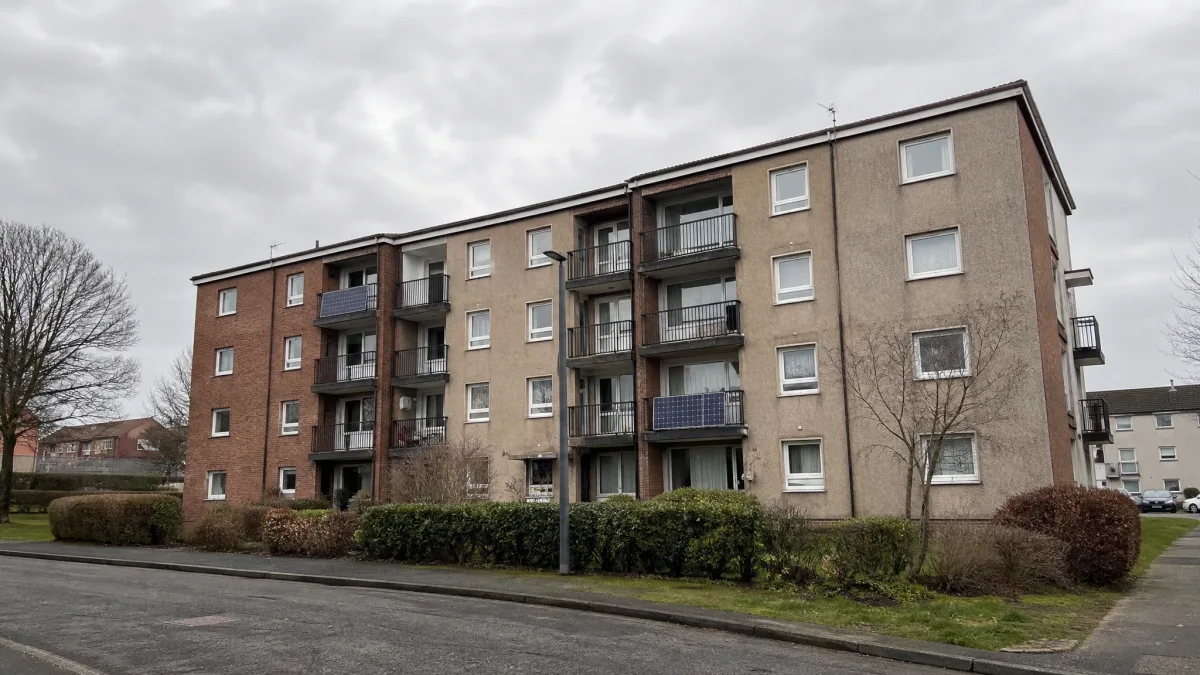
Search for solar and a flat, and most answers assume you own a roof. You do not, and most of what gets written about “solar for flats” is really about solar for the building, a decision that sits with your freeholder or management company, not you. This page separates the three real routes and says plainly which one you can act on without anyone else’s agreement.
Route one: a shared rooftop scheme
A handful of systems, the one most cited is Allume Energy’s SolShare, split the output of a single rooftop solar array across multiple flats in the same building, so each household gets a share of the generation on its own meter. The UK Green Building Council describes it as designed specifically to give apartment residents access to solar that would otherwise only benefit whoever owns the roof.
The catch is scale. This is a whole-building decision: someone has to commission an array sized for every participating flat, and it is normally the freeholder, a management company, or a housing association making that call, not an individual leaseholder or tenant. If your building has not already looked into this, raising it is a management-committee conversation, not a purchase you can make this month.
Route two: a ground-mounted array on shared grounds
If your building has a communal garden, car park or patio, a small ground-mounted system is possible there in principle, within the same permitted development rules that apply to any free-standing plug-in kit. We cover those rules, including the timber-mounting exception that removed permitted development rights for wooden fences from 27 August 2026, in our guide to where you can put plug-in solar.
In practice this still routes through whoever manages the shared grounds. A ground-mounted array on communal land is not yours to install without agreement, in the same way a balcony fixed to the building is not, and the consent question is covered in our guide on whether a landlord can refuse.
Route three: plug-in solar, the one you can act on alone
This is the route this site exists for. A plug-in kit needs a socket and, if you have one, a balcony, patio or window ledge you control, not the building’s shared spaces. It needs no freeholder decision and no building-wide commissioning. From 27 August 2026 it is legal to connect in England, Wales and Scotland, subject to conditions we quote from the instrument itself.
This is why the rest of FlatWatt is built around this route rather than the other two: it is the only one where the decision is yours. If you have not already, the next pages to read are:
- What to actually buy, and what it costs
- Whether your landlord can say no
- Where you are allowed to put it
What we have verified, and what we have not
Verified against a primary or named source. The SolShare technology and its purpose, from the UK Green Building Council’s own resource page. The plug-in solar legal conditions, quoted from the statutory instrument elsewhere on this site. The permitted development timber exception, likewise quoted from source elsewhere on this site.
Not independently verified by us. Pricing, availability, or the commissioning process for shared rooftop schemes like SolShare in any specific UK building. We have not contacted a provider or priced an installation, and this page should not be read as a cost comparison between the three routes, only as a map of who has to agree to what.
Our editorial policy explains how we handle claims outside our core subject.
This page carries the date it was last checked. If you know of a shared rooftop or communal ground-mount scheme that renters can actually initiate themselves, tell us and we will check it and add it.