EcoFlow DELTA 3 in the UK: which one, what it costs, and what it will not do
The DELTA 3 Classic is a 1,024 Wh, 1,800 W power station listed between £399 and £649 depending on seller and sale. It is a backup and camping battery, not plug-in solar, and the Plus and Max cost far more.
Rules and product details last checked on .
Key takeaways
- The DELTA 3 Classic is listed at 1,024 Wh with 1,800 W AC output and 3,600 W surge, on the Amazon UK listing text. We saw it between £399 and £649 across sellers on 30 September 2026, with the same model shown at both sale and regular prices.
- Several models share the name. Classic, Plus and Max differ in capacity and output, and Max listings at £999 to £1,549 hold 2,048 Wh with 3,000 W output. Check which one a price refers to.
- It is a power station, not plug-in solar. It does not feed your home and cannot cut your bill. The kit that does is a different product.
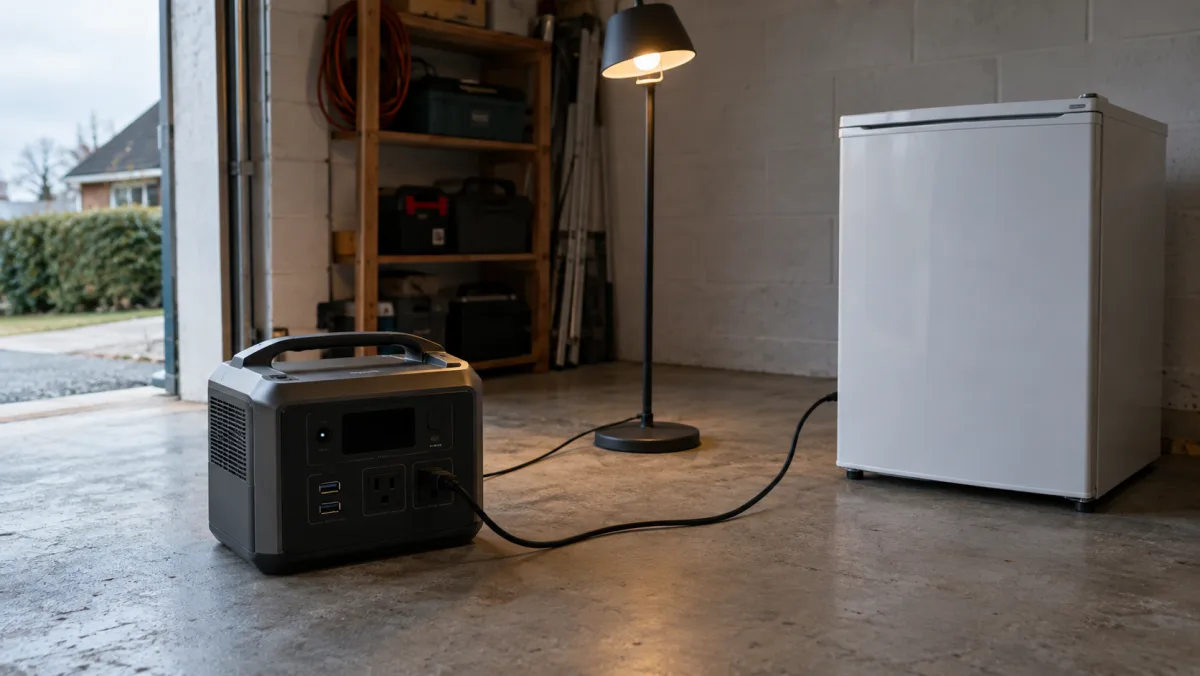
- Its job is a power cut, a campervan, or a garden project. It can run a fridge for a while; see the arithmetic below.
- Buy it for those jobs, or not at all.
“EcoFlow DELTA 3” is one of the most searched products in this whole area, and most people typing it want a backup battery. Here is what the range is, and the honest limits.
What the models are
From listings and seller text, not from lab tests:
| Model | Capacity | AC output | Seen at (30 Sept 2026) |
|---|---|---|---|
| DELTA 3 Classic | 1,024 Wh | 1,800 W, 3,600 W surge | £399 to £649 |
| DELTA 3 Plus | 1,024 Wh | 1,800 W | £599 to £899 |
| DELTA 3 Max | 2,048 Wh | 3,000 W, 6,000 W surge | £999 to £1,549 |
| Extra battery | add-on | n/a | £459 |
The spread comes from different sellers, sale prices against regular prices, and bundles with panels or extra batteries, so a single figure would mislead. The same Classic appears at £399 (regular £499), £569 and £628 (regular £748) in different listings. We have not verified which is current on EcoFlow’s own store; check there before buying.
Will it run a fridge?
Probably, for a while, and the arithmetic is yours to do. Take your fridge’s yearly kWh from its energy label, divide by 365 for daily kWh, and multiply by 1,000 for daily watt hours. Divide the battery’s 1,024 Wh by that daily figure to see days of running, before conversion losses that reduce it. We cannot give you a fridge number because it depends on your model.
Start-up surge matters as well as running load, and the 3,600 W surge rating is intended for that, though we have not tested it with a fridge. A kettle at 2,000 to 3,000 W is too big.
What it is not
It is not plug-in solar. The law’s category is a device that feeds your home in parallel with the grid. A power station isolates its own supply, which is why it needs no network notification and saves nothing on the bill. If a power cut is your worry, it is the right kind of product. If the bill is, read the buying guide instead.
Where it fits with solar
You can charge it from panels through its solar input, which makes a slow, small store of your own generation. That is a use, but not the balcony route the rest of this site covers, and it does not offset mains use the way a grid-connected kit does. Our battery page compares the options.
What we have verified, and what we have not
From listings, 30 September 2026. The Classic’s capacity, output and surge figures, from the Amazon UK listing text and seller listings; the price range, from live retail listings.
Not verified. Prices on EcoFlow’s own UK store, which rate-limited us when we tried, the Plus specification beyond its capacity, real-world runtime, and any figure for your own fridge. We have not tested the hardware.
Our editorial policy explains how we handle claims we cannot check.
Prices in this category move quickly. If you see a different live price, tell us and we will verify it.